Brendan Hayden, CEO/CTO of AdOr Information Technology, believes that retail supply chains are on the verge of a technological revolution. From artificial intelligence to robotics and IoT, the innovations shaping warehouse management are transforming how businesses operate and compete.
Key Trends in Supply Chain Technology
Brendan identifies several pivotal trends driving change in retail supply chains:
- Real-Time Data Integration: IoT sensors, RFID, and cloud analytics are providing unprecedented visibility, with growing demand for real-time inventory tracking and automated data capture.
- AI-Driven Decision Making: Beyond automation, AI is powering predictive analytics and intelligent optimization, areas AdOr continues to enhance within its WMS platform.
- Autonomous Operations: While South African adoption is still selective, autonomous mobile robots and guided vehicles are redefining material handling.
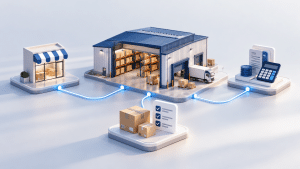
- Seamless System Integration: Eliminating silos by connecting ERP systems, WMS platforms, and logistics providers ensures true end-to-end visibility.

Technologies with Long-Term Impact
Looking ahead, Brendan highlights AI, IoT ecosystems, and advanced robotics as the forces that will fundamentally reshape the industry. AI will drive predictive maintenance and route optimization, IoT will provide granular insights into asset and environmental conditions, and robotics will democratize efficient warehouse operations.
AI in Action
For Brendan, AI’s real-world impact is already visible:
- Seasonal demand prediction and dynamic reorder calculations.
- Automated handling of inventory discrepancies.
- Predictive analytics for equipment maintenance.
- Natural language interfaces for faster system queries.
Together, these innovations allow more accurate delivery promises, proactive communication with customers, and personalized inventory management.
IoT for Visibility and Waste Reduction
AdOr’s research into RFID and IoT has demonstrated measurable results, including 15–25% reductions in inventory discrepancies and stronger compliance in cold chain environments. Real-time monitoring of location, temperature, and energy consumption enables faster responses, less waste, and improved security.
The Role of Automation and Robotics
Automation is reshaping warehouse efficiency:
- Pick and pack operations are becoming automated.
- Continuous cycle counting replaces periodic manual counts.
- Vision systems enhance quality control.
Although adoption in South Africa is gradual, early adopters are reporting 20–30% improvements in picking accuracy, shorter training times, and safer workplaces.
Preparing for the Future
Brendan stresses that businesses must be ready for challenges such as change management, integration complexity, and workforce training. His advice: adopt phased implementation, invest in training, and measure ROI at every step.
A Vision for the Next Decade
Over the next 5–10 years, Brendan sees supply chains moving towards:
- Autonomous, self-managing networks.
- Blockchain for traceability
- Augmented reality for warehouse guidance and training.
- AI-driven sustainability initiatives.
- Edge computing for faster decision-making.
Success, he notes, will depend on blending human expertise with intelligent, adaptive systems.
“The future of supply chain technology is not just about automation. It’s about creating intelligent, adaptive systems that enhance human capabilities and drive business success.” – Brendan Hayden
At AdOr Information Technology, Brendan and his team are committed to developing WMS solutions that bring this vision to life – combining cutting-edge technology with practical, results-driven implementation.